
My Two Most Embarrassing English Mistakes (And What they taught me)
Does the fear of making a mistake in Japanese ever actually go away? Honestly? Not all the way. But it stops being the thing that keeps you quiet. Here’s the story, plus the Japanese you need.
You can also watch the episode here: YouTube
The student who only talked to convenience store clerks
I’ve taught a lot of students over the years, and one of them stuck with me. She told me, “I finally made it to Japan, but I’m too scared to go to a restaurant and talk to a Japanese person, so I’ve just been going to convenience stores this whole time.”
せっかく日本に来たのに、レストランに行って日本人と話すのが怖くて、ずっとコンビニしか行ってないんだよね
I finally made it to Japan, but I’m too scared to go to a restaurant and talk to a Japanese person, so I’ve just been going to convenience stores this whole time.
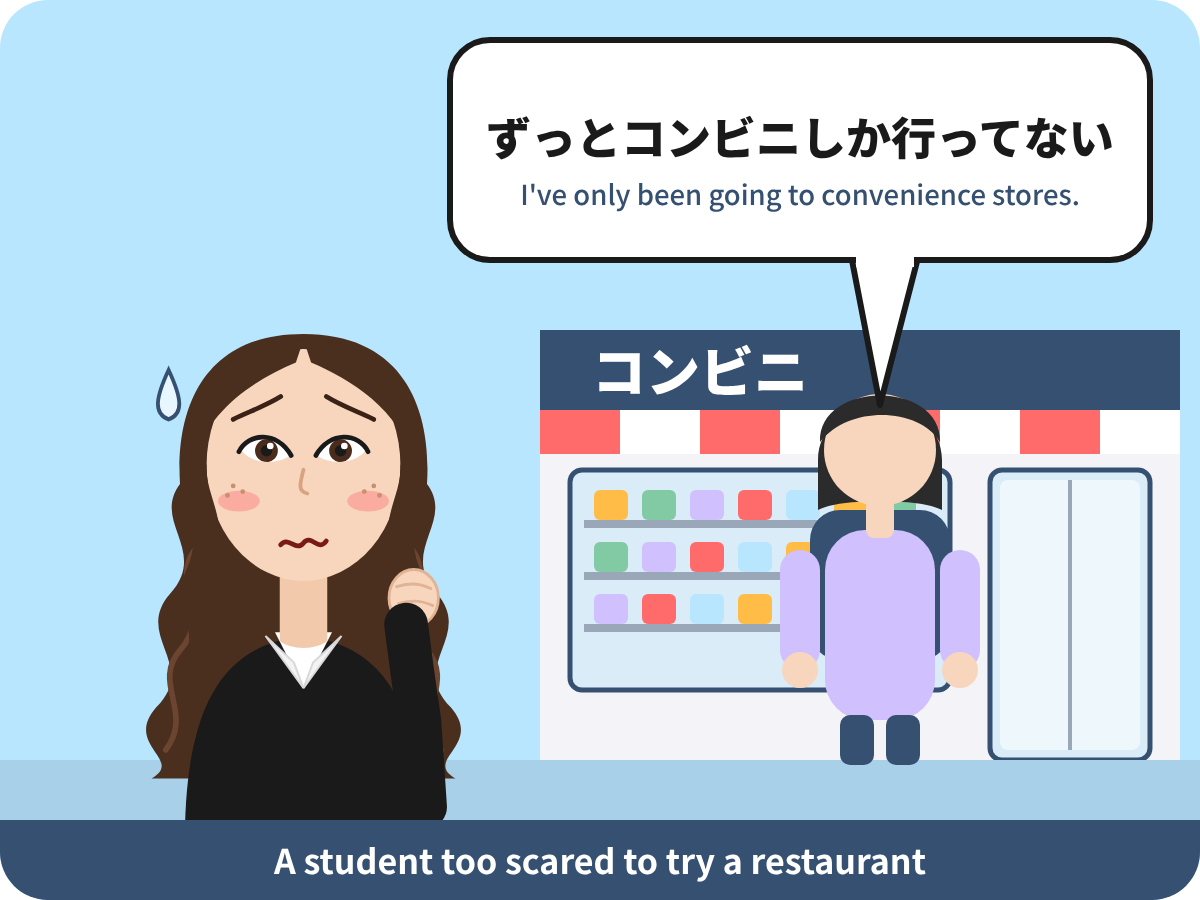
This is the same student who spoke perfectly in class. In my mind, she could absolutely handle ordering at a restaurant. She just never gave herself the chance. “No, no, what a waste!” I remember thinking.
My 3-year-old niece can’t say “corn” either
My niece is 3. My nephew is 5, and his Japanese has gotten pretty sharp lately, but my niece still mixes words up in the cutest way. She couldn’t say とうもろこし (corn), so it came out as:
とうころもし
her version of とうもろこし, corn
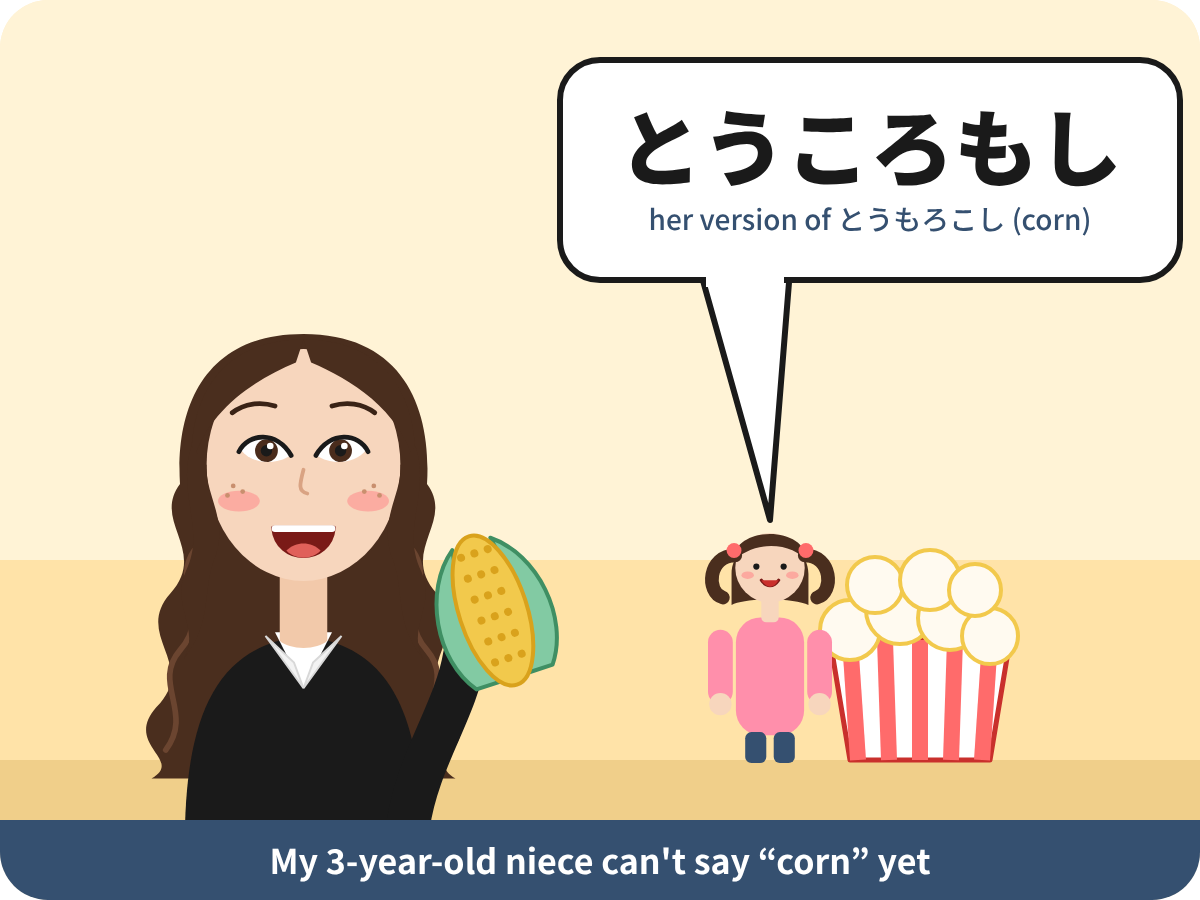
And ポップコーン (popcorn) became コップポーン, something totally different, haha. But here’s the thing: she doesn’t care. She’s not embarrassed. She just wants you to know she wants popcorn, so she says it anyway. That’s the whole lesson, really.
My viewers correct my English all the time (and I love it)
I can speak English, but I am absolutely not perfect at it. People who watch my other channels catch my pronunciation mistakes and grammar mistakes all the time. I once said “situation” wrong and got a comment. I once wrote “I have a good news” and got corrected, because news doesn’t take “a.”
教えてくれてありがとう
thank you for teaching me
That’s genuinely how I feel every time. Not embarrassed, grateful. A mistake pointed out kindly is a free lesson.
The food court mistake I will never live down
The first time I went to America, I barely spoke English. I went to a mall, found a food court, and there was one open seat next to a stranger. I wanted to ask, “Can I sit here?” Simple enough. Except Japanese doesn’t have the sound “si,” only “shi.” So instead of “sit,” what came out sounded like I was asking to use the toilet.
ここでトイレしてもいい?
roughly, what it sounded like I asked instead of 「Can I sit here?」
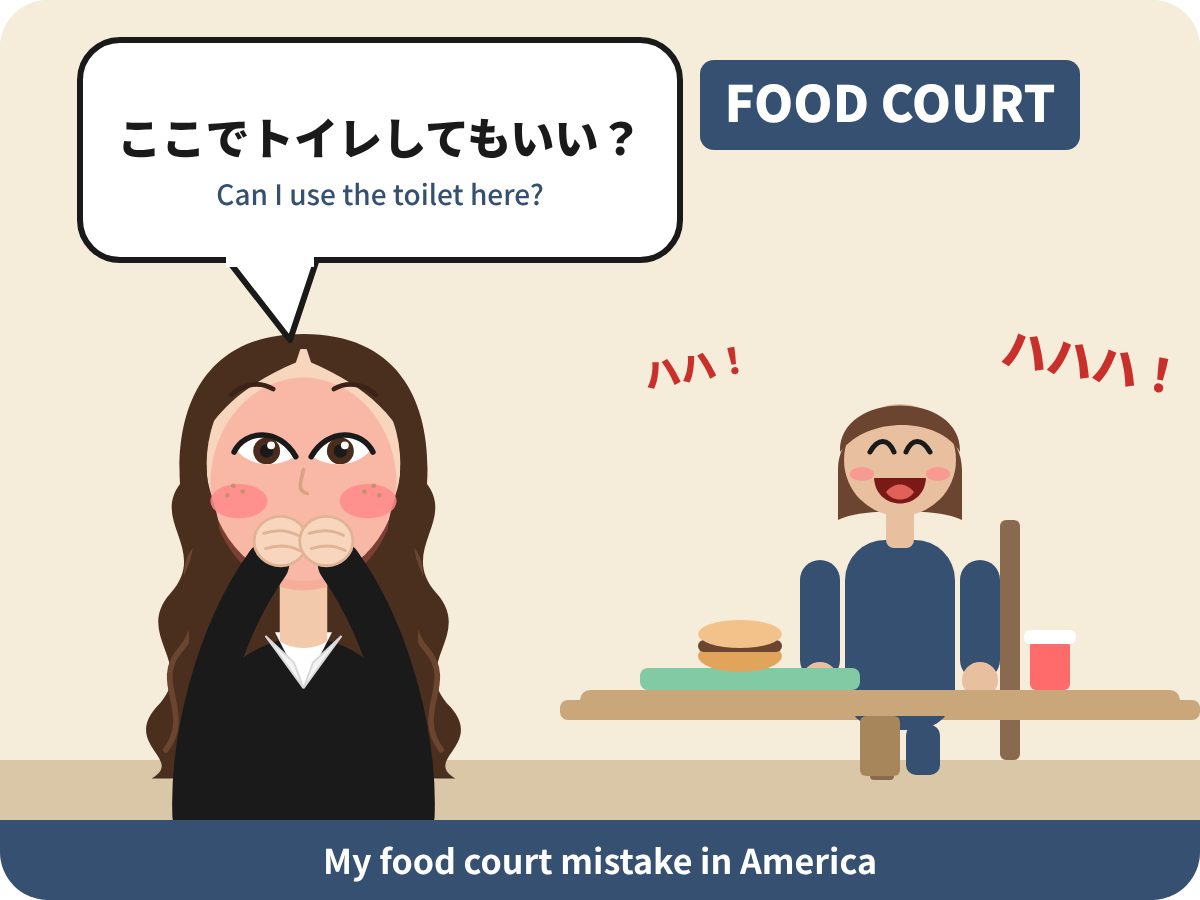
The person next to me was not expecting that question. They burst out laughing, I mean, really laughing. I had no idea why at the time. I figured it out later, practiced a lot, and now I tell this story on purpose.
The day I called my teacher the wrong word entirely
I was at a language school, and I heard that today’s usual teacher was out, so a substitute was coming in. I wanted to ask them, “Are you the substitute teacher?” What I actually said was:
Are you the prostitute teacher?
not what I meant to say, at all 🫢
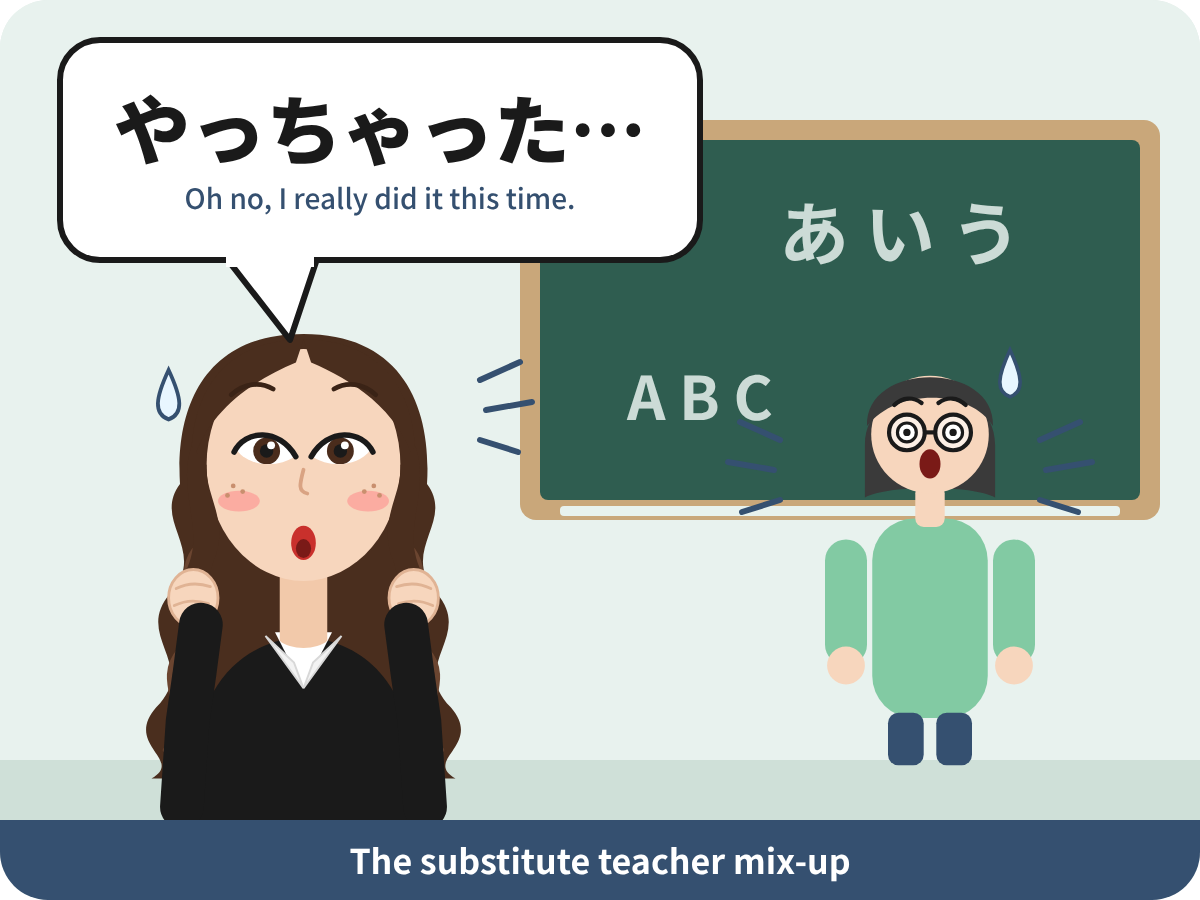
The teacher looked genuinely shocked. Thankfully, they knew I was an English learner, so they gently said, “Um, I’m the substitute teacher, not a prostitute. Substitute,” and I just thought, “oh no, I really did it this time.” I didn’t even know what the word meant until I looked it up afterward. Mortifying💀. Also, now unforgettable, in the best way.
Mistakes are 伸びしろ, room to grow
Making a mistake means you tried. You took what you studied, turned it into real words, said them out loud, and found out exactly what to fix next time. That’s not failure.
本当にこれ「伸びしろ」でしかないんですよ
this is really nothing but room to grow
伸びしろ literally means the space you still have left to grow into. Once you’ve made the mistake, there’s nowhere to go but up from there. There’s no going down from here.
My answer: does the fear go away completely? No. Not for me, not after all these years of speaking English, and probably not for you either, not completely. But a mistake stops being proof that you failed. It becomes 伸びしろ, one step up, 一歩レベルアップ. That’s the actual difference.
Key Words from This Episode
恐れる (おそれる): to fear, to be afraid of
完璧 (かんぺき): perfect
流暢 (りゅうちょう): fluent
文法 (ぶんぽう): grammar
発音 (はつおん): pronunciation
なまり: accent, dialect
悔しい (くやしい): frustrating, regrettable
通じる (つうじる): to get through, to be understood
爆笑 (ばくしょう): bursting into laughter
代わり (かわり): substitute, replacement
挑戦 (ちょうせん): challenge
伸びしろ (のびしろ): room to grow, potential
Grammar Spotlight
〜ないでください: please don’t do X
間違えることを本当に恐れないでください。
Please don't be afraid of making mistakes.
A polite, gentle way to ask someone not to do something. It’s softer than a command, more like a caring request.
〜たらどうしよう: what if X happens
間違えたらどうしよう。
What if I make a mistake?
This is that anxious loop your brain runs right before you speak. Naming it in Japanese somehow makes it feel smaller.
〜ようになる: to come to be able to do X
今すごく綺麗に話せるようになってるんであって
which is exactly why they've come to be able to speak so beautifully now
Use this for any skill that grew slowly, over time, instead of appearing overnight. That’s basically all skills.
Cultural Insight
If you’ve spent any time speaking Japanese with Japanese people, you’ve probably heard 「日本語上手ですね」 (“your Japanese is so good”) more times than you can count, sometimes after just a sentence or two. It can feel like a strange thing to hear, especially if you know your grammar wasn’t perfect. But it’s not politeness for politeness’ sake. Japanese is mostly spoken in one country, by people who grew up with it, so when someone goes out of their way to learn it as a second language, that effort genuinely means something to them.
It also helps to remember that even native Japanese speakers make grammar mistakes all the time, Sayaka included. Perfection was never actually the local standard, for anyone, native speaker included.
So if your pronunciation doesn’t land the first time, just say it again, or ask directly: 「なんて言うの?」(“how do you say it?”). Nobody is quietly judging you for asking. Most people are just glad you’re talking to them at all.
Mini Quiz
Your turn
What’s the most embarrassing mistake you’ve ever made speaking a foreign language? (Yes, even in English.) Try writing it in Japanese, using this pattern:
わたしは__と言いたかったのに、__と言っちゃいました。
I wanted to say ___, but I accidentally said ___.
Practice This Episode
Shadow this episode in the NihongoDekita Podcast app to practice every line, with furigana, translations, and all the vocabulary and grammar from this post.
Got your own embarrassing mistake story? I’d love to hear it. Email me at [email protected].
Ready to learn more?
If you’re ready to go further than one episode at a time, check out our Japanese courses.


