
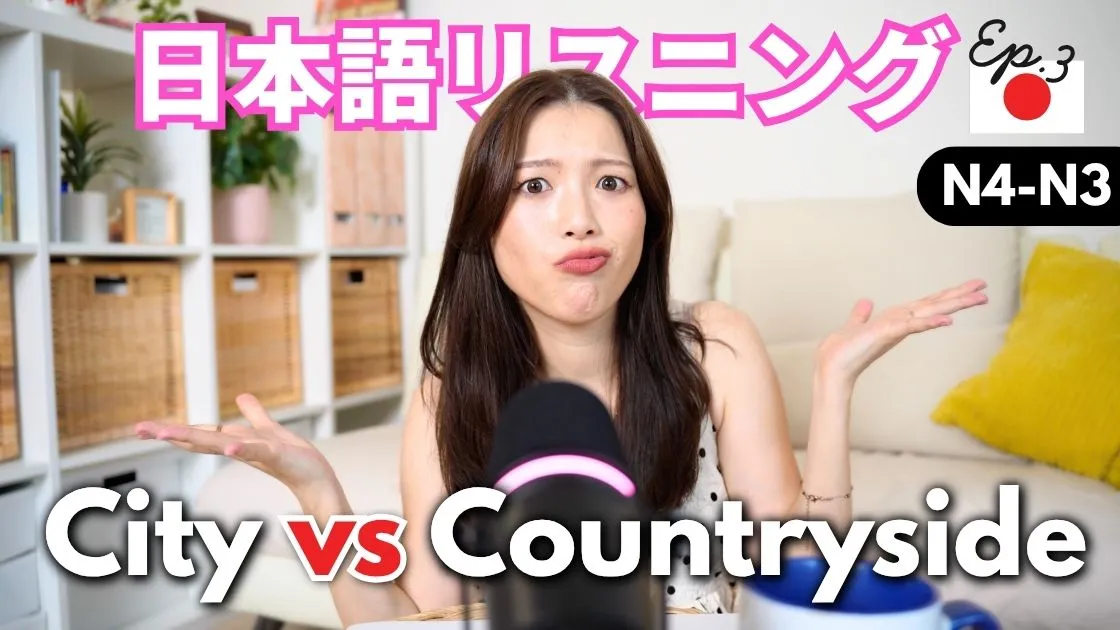
City or Countryside? What Moving Back to Nagoya Taught Me
I have lived in both, and I still changed my mind about it twice. In Episode 3 of the NihongoDekita Podcast, I went through the good and bad points of each, and I ended up somewhere in the middle: the suburbs.
Here is the story, plus the Japanese you need to talk about where you live.
You can also watch the episode here: Youtube
Where I’m from (it is not as rural as it sounds)
I grew up in the countryside of Aichi. There were restaurants, trains, and buses. It was not “deep in the mountains.”
But to someone from Tokyo or Osaka, it counts as the countryside. Maybe even to someone from Nagoya haha.
Then I lived in Yokohama for two years, about 15 to 20 minutes from Tokyo by train. This January, I moved back to Nagoya.
Why? Let’s go through it.
そんな山の中から出てきたわけじゃないんですけど。
It’s not like I came from deep in the mountains.
東京とか大阪の人からしたら、田舎だと思います。
To people from Tokyo or Osaka, I think it counts as the countryside.
The city: so much to do, so little brain left
The city wins on choices. In Yokohama, I would say “I feel like a restaurant tonight” and have 1,000 options, not 100. It never gets boring.
But I don’t like shopping, and too many options make my brain tired. I would rather have someone good at fashion decide for me (yes, that is the Episode 2 omakase story).
Cities also have more jobs. When I met people in Tokyo, I kept thinking “that job exists?!” Back home, almost everyone around me worked for Toyota or a company connected to it.
And the city has more networking. I tried it once. I stood in a packed room thinking “oh no, will someone please talk to me?” and went home to Nagoya.
The maze (a.k.a. the Tokyo train map)
The first time I looked at a Tokyo route map, I thought:
何この迷路?!
What is this maze?!
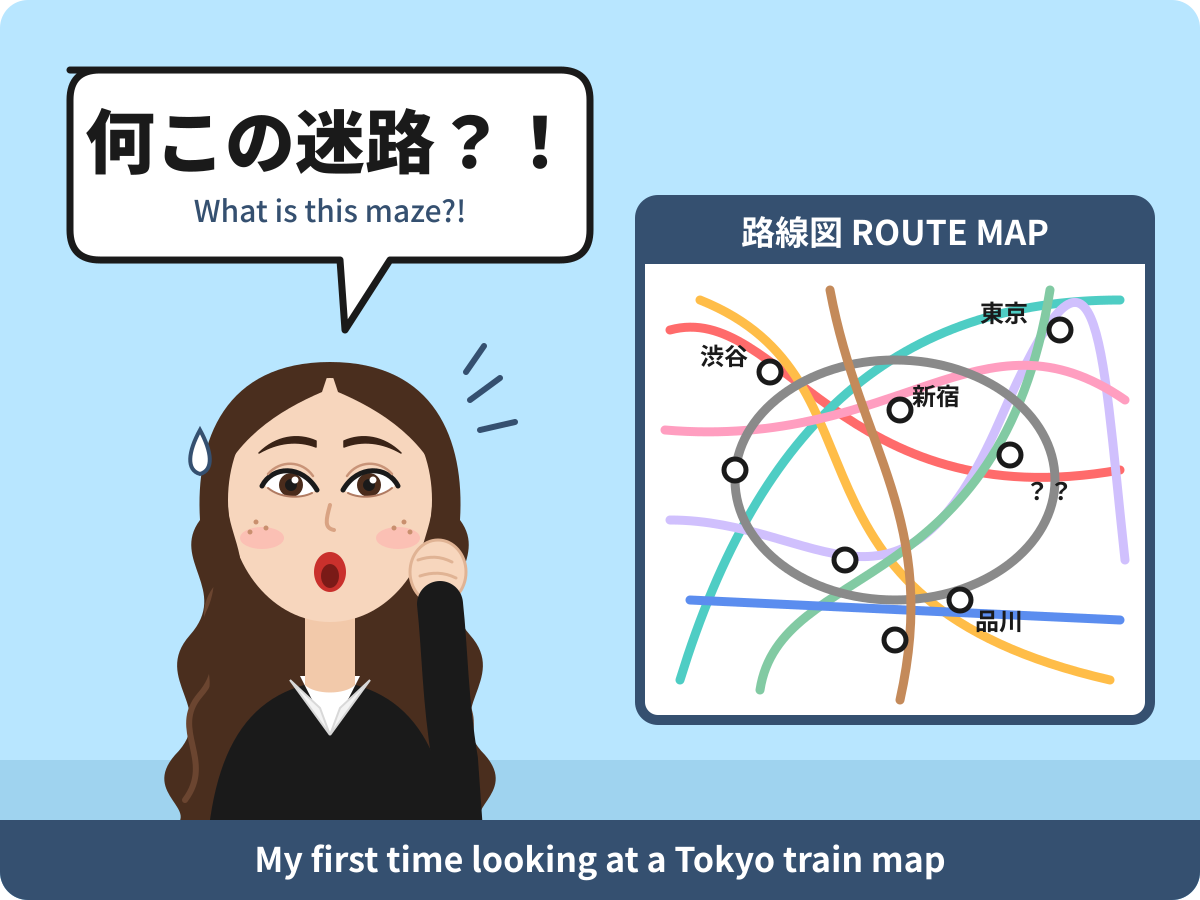
A route map is called 路線図 (ろせんず). From Shibuya to Tokyo Station, there are so many ways to go that I could not decide which was best.
After two years, I got used to it. Humans are amazing, right?
The countryside: where the last train leaves early
Countryside transport is not terrible. There are buses and trains almost everywhere. There just are fewer of them.
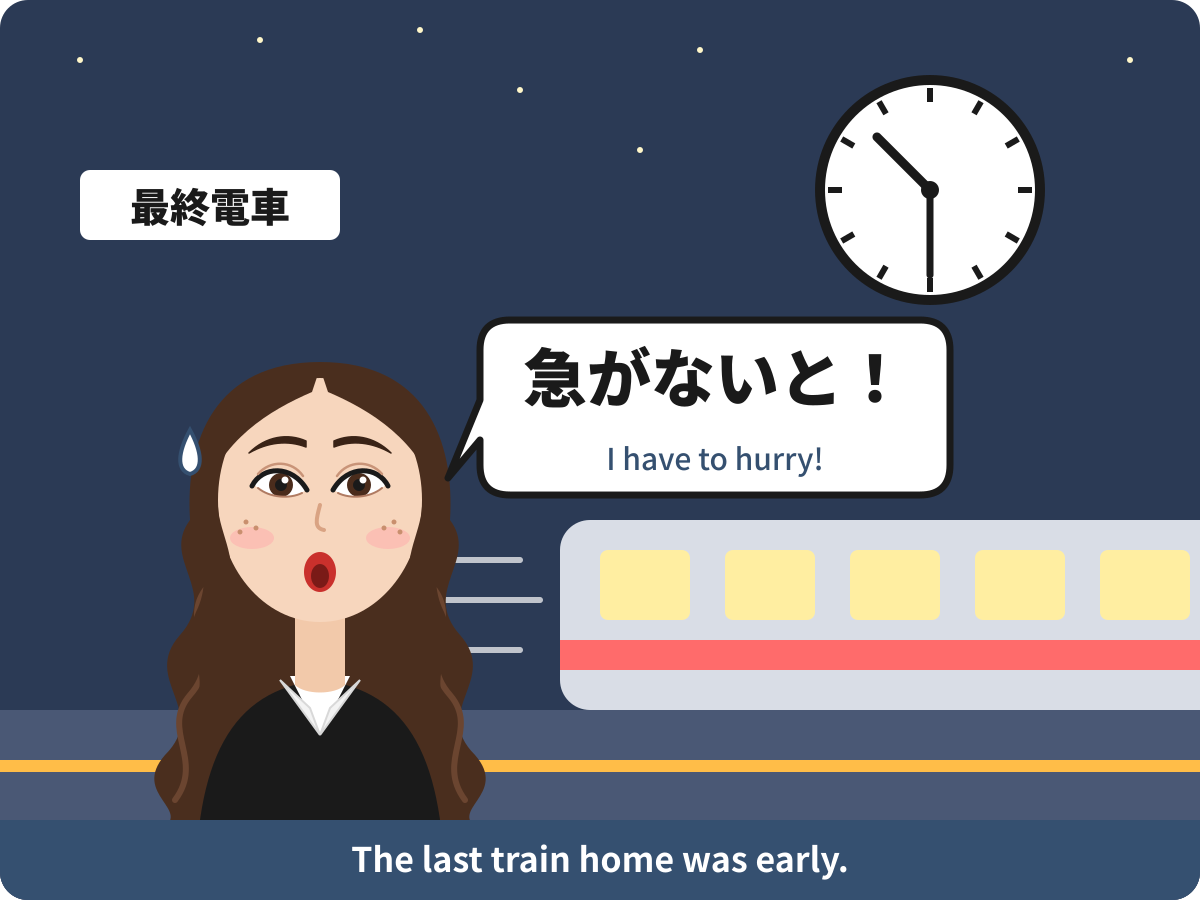
In university, I commuted one hour from my parents’ house. My part-time job was another 30 minutes past that. Everyone else worked until 11:30. I had to stop at 10:30, change clothes in a rush, and run for the last train.
急がないと!
I have to hurry!
Another thing: in the countryside you need a car. The moment I turned 18, I went to driving school. On the day I got my license, I took my mom’s car without asking and drove to a friend’s house.
Meanwhile, many people in Tokyo are ペーパードライバー: they have a license but almost never drive. They just do not need one.
The sidewalk that changed my life
This is my favorite part.
When I lived in Yokohama, my neighborhood was full of babies, strollers, and bikes. The sidewalk was narrow. Every time I passed someone, I had to squeeze by.
あ、すいません!
Oh, excuse me!
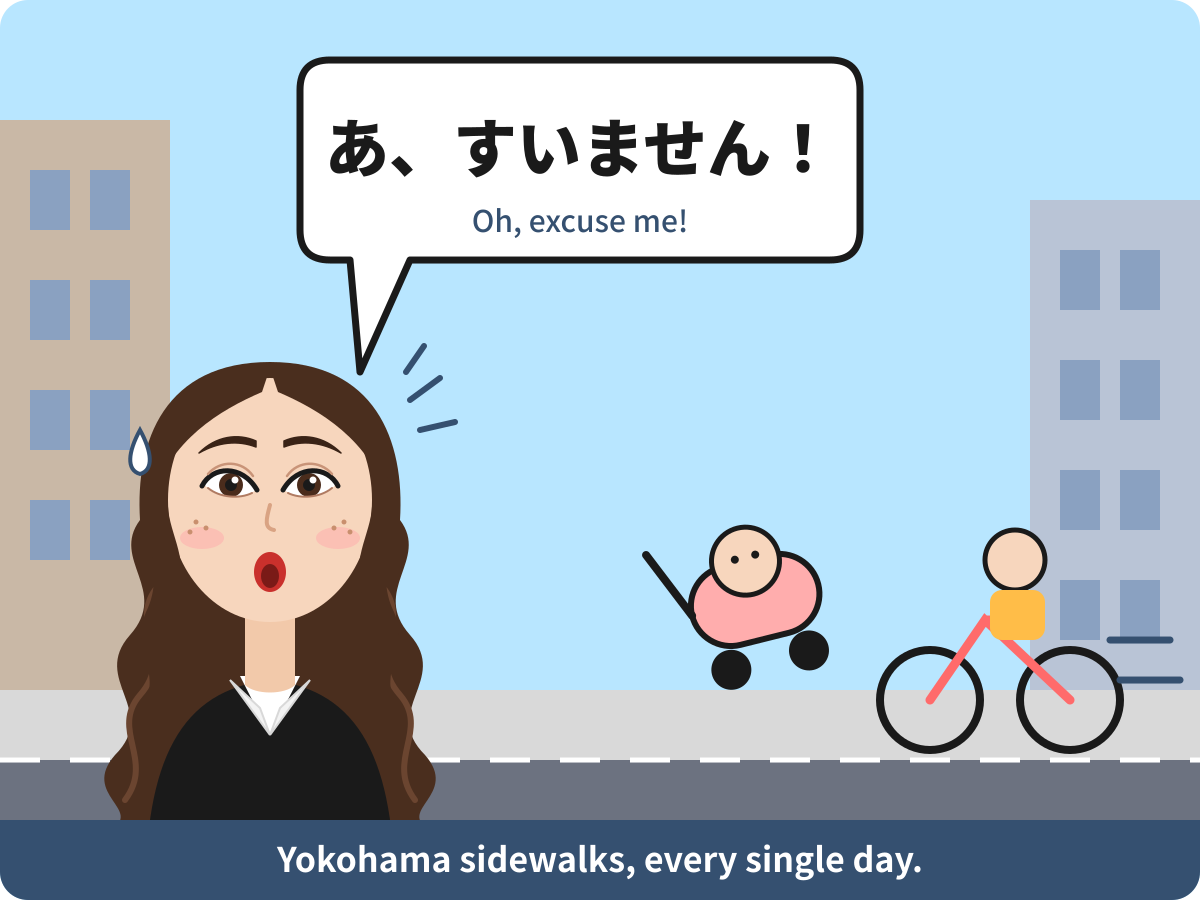
Strollers tilted on the slope, babies bouncing, and parents on bikes with kids, pedaling at full speed. It was scary.
Then I moved to Nagoya. The sidewalks are so wide, you could practically play soccer on one. And my rent was cut in half for a place about the same size.
名古屋に引っ越してきて家の広さはあまり変わってないのに、家賃が半額になりました。
I moved to Nagoya, and the size of my home barely changed, but my rent was cut in half.
Kind people, slow time, and air that tastes good
In the city, I found people colder and more rushed. Everyone is busy, so the people around you hardly register. In the countryside, people say “oh, hello” to strangers without thinking.
And when I lived in Yokohama, I would rent a car and drive to my parents’ place. The moment I opened the car door, I would say:
空気が美味しい!
The air tastes good!
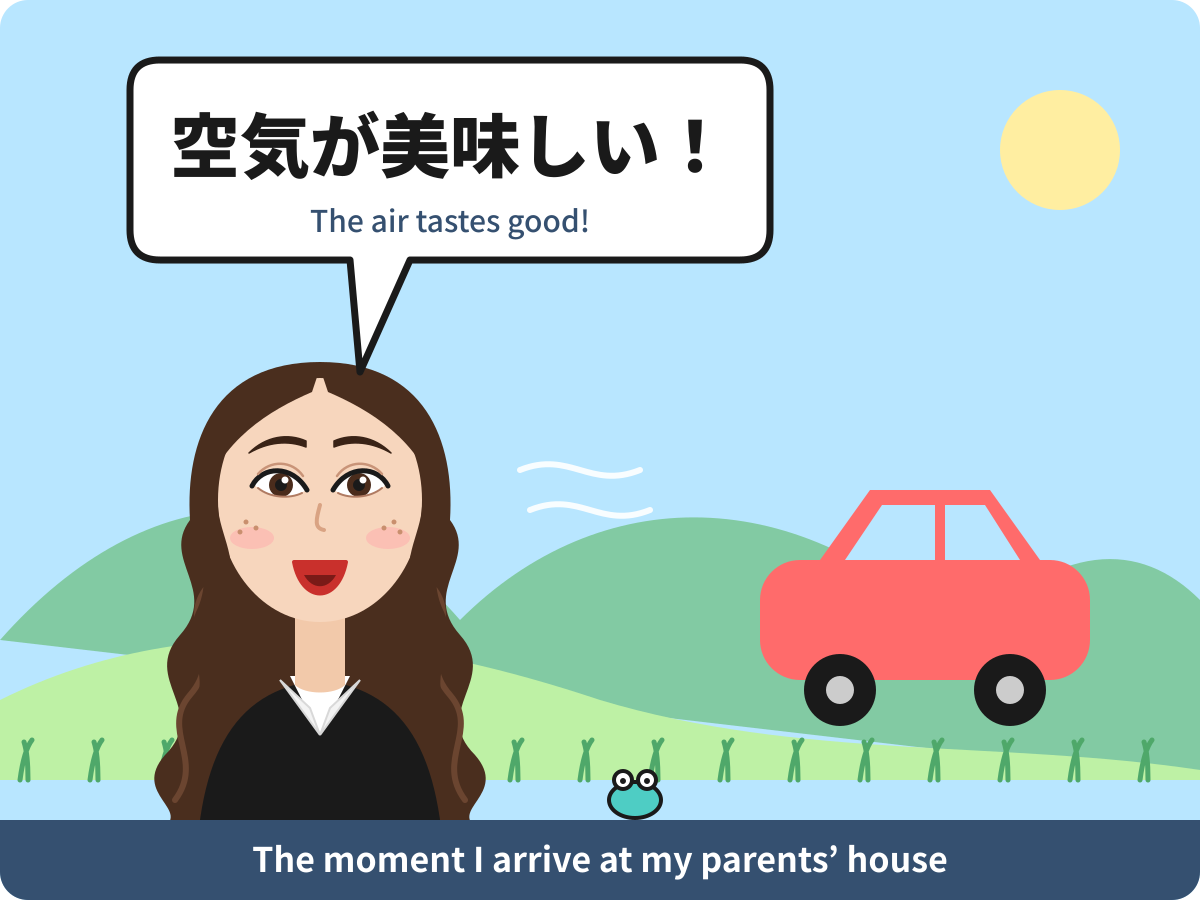
Green fields, frogs croaking, the smell of nature. I always thought, “I want to live somewhere like this.”
My answer: slightly outside the city
Here is my ideal life:
Space. Big enough to lie down anywhere on the floor.
Low fixed costs. I would rather spend on travel and experiences than rent.
A place where I feel connected to the people around me.
Time to cook. A big supermarket, and maybe my own tomatoes and cucumbers someday.
Quiet. Frogs are fine. Human voices at midnight are not.
So my answer is 郊外 (こうがい), the suburbs: easy to reach the city, but not the city itself.
私の理想の人生に合ってるのは、どちらかといえば田舎かなと思います。
What fits my ideal life is, if I had to choose, the countryside.
Am I there yet? Not 100%. But closer than in Yokohama.
Key Words from This Episode
都会 (とかい): the city
田舎 (いなか): the countryside; also your hometown
郊外 (こうがい): the suburbs
交通の便 (こうつうのべん): transport access
路線図 (ろせんず): route map
慣れる (なれる): to get used to
歩道 (ほどう): sidewalk
家賃 (やちん): rent
物価 (ぶっか): prices, cost of living
固定費 (こていひ): fixed costs
理想 (りそう): ideal
落ち着く (おちつく): to calm down, to feel settled
Grammar Spotlight
1. ~からしたら: “from the point of view of”
東京の人からしたら、名古屋は田舎です。
To people from Tokyo, Nagoya is the countryside.
It shows that the opinion belongs to those people, not to everyone.
2. どちらかといえば: “if I had to choose”
どちらかといえば田舎かな。
If I had to choose, the countryside.
The softest way to answer an either-or question. You show a leaning without sounding absolute.
3. ~わけじゃない: “it’s not that...”
そんな山の中から出てきたわけじゃない。
It’s not like I came from deep in the mountains.
Use it to correct a wrong picture before the listener forms it.
4. ~ちゃう: “I ended up...” (casual)
名古屋に戻ってきちゃいました。
I ended up coming back to Nagoya.
A casual form of てしまう. It adds a slightly sheepish feeling.
5. 一方: “on the other hand”
一方、田舎の方は交通の便があまり良くないですね。
On the other hand, transport in the countryside isn’t great.
Good for comparing two sides, like city vs. countryside.
Cultural Insight
Japan has a quiet problem: neighbors who do not say hello. In my grandparents’ generation, people talked to strangers on the street. Today, many people in the same building just nod, or avoid eye contact.
That is why I love Osaka. People there talk to strangers, from elementary schoolers to grandpas, and I always end up thinking “where did you come from?” in a good way.
So if you move to Japan, the city is easier for work and fun. But if you want to feel connected, join something: a hobby group, a class, a local event. In the city, connection does not come to you.
Mini Quiz
Your turn
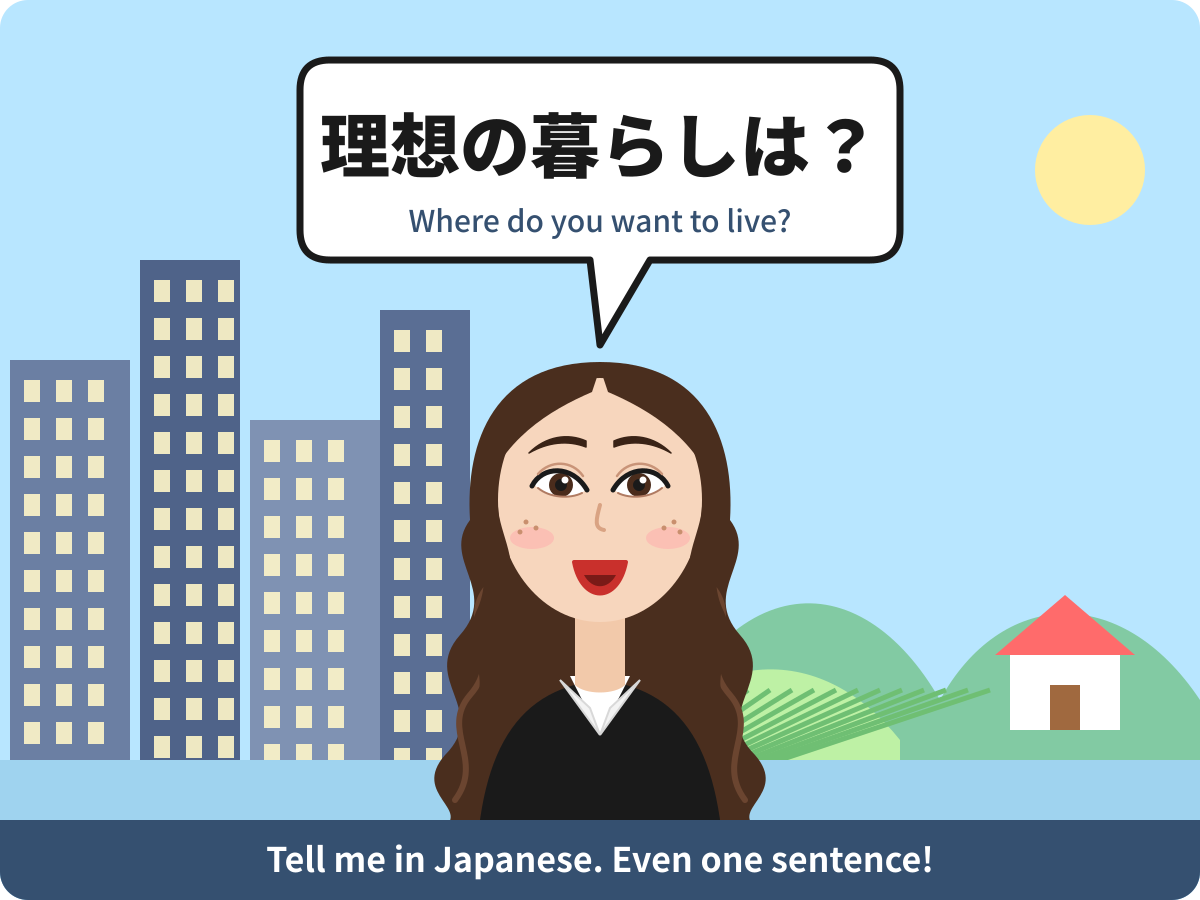
Where do you live now? Does it match your ideal life? Tell me in Japanese, even one sentence. For example:
私は郊外に住んでいて、どちらかといえば静かな方が好きです。
Practice This Episode
Want to hear exactly how Sayaka says these phrases? Shadow this episode in the NihongoDekita Podcast app, with the full transcript, furigana, English translations, 70+ vocabulary words, and 13 grammar points.
Shadow Episode 3 in the app!
Have a culture shock story or a question about life with Japanese people? Send it to [email protected], and I will talk about it in a future episode.
Ready to learn more?
Want to speak Japanese with confidence in real situations like this? Check out our Japanese courses!


